A Peace Corps buddy of mine, RJ, and I stood on the summit of the tallest point in Central America. At 4,200 meters, Volcan Tajumulco is situated in the western part of Guatemala. From the top (felt great to be at about 14,000 feet again) we could see at least three of Guatemala's more than 30 majestic volcanoes. We could also see the country north of us, Mexico, where Volcan Tacana lies directly on the Guatemalan Mexican boarder. We were in cloud cover most of the day but I was able to snap a few photos when it would temporarily clear. Unfortunately we never got a break from the clouds while we were on the summit. All in all it was a magical and meaningful day in the hiking boots.
As we enter nice hiking weather, I hope all of you make free time to get out and enjoy the wonders of nature. I recommend Richard Dawkin's new book The Greatest Show on Earth as reading material that will have you appreciating all of the biological diversity and will educate you on why it's here. After reading this book it is impossible for me to look at the world in the same way. The works of E.O. Wilson and Carl Sagan affected me in a similar way.
Happy trails and remember... UNGOWA!!
Tuesday, May 11, 2010

Friday, April 30, 2010
An Overdue Entry -- Our Ambassador and Building Bridges
Hello all my faithful followers. This is a long overdue blog entry, I know. I have either been very busy or very lazy. The truth is I've been both. I've been lazy about blogging and busy experiencing a few things I will now describe.
First, the U.S. Ambassador to Guatemala, Stephen McFarland, was in my town taking part in an activity not far outside the pueblo. Afterward he dedicated about an hour to visit with us Peace Corps volunteers (PCV). We had coffee, cake and a good conversation about what we PCVs are doing up here in the Guatemalan highlands. Overall I must say that Ambassador McFarland is very dedicated to his job and is a big supporter of Peace Corps.
Now on to building bridges. I have dedicated much of my time recently to an NGO called Bridges to Prosperity (www.bridgestoprosperity.org). They specialize in foot bridges and have projects in Africa, the Americas, and other places on this planet of ours. They have three foot bridge projects in the area where I live. Before becoming involved with them I had no idea how big of an impact a bridge can have on a small community.
At one of the three bridge sites here, the bridge connects two small communities with an aggregate population of about 1,500. There is only one school and one health clinic located in the larger of the two communities. During the rainy season (May - Nov in Guatemala)the kids from the smaller community can't go to school and nobody can get to the health clinic because they are unable to cross the swollen river dividing the two communities. During times of emergency, a complicated labor for example, this bridge makes it possible for the villagers from the smaller town to get the medical attention they desperately need. And it very well can be a matter of life and death.
Bridges to Prosperity is one of the few non profit organizations specializing in foot bridge construction. They've recently been featured in Parade Magazine and you can find the article on their website. It's been informative and fun working with this organization and in the next two months I will help with the construction of two more bridges here in our special little spot in the highlands. Downloading pictures takes a lot of time here where the internet speed is slower than a heard of drunk turtles stampeding through peanut butter. But you can get a good idea what I'm talking about by visiting their website.
I'm only about 6 months away from completing my 2 year Peace Corps service. Whao!!
First, the U.S. Ambassador to Guatemala, Stephen McFarland, was in my town taking part in an activity not far outside the pueblo. Afterward he dedicated about an hour to visit with us Peace Corps volunteers (PCV). We had coffee, cake and a good conversation about what we PCVs are doing up here in the Guatemalan highlands. Overall I must say that Ambassador McFarland is very dedicated to his job and is a big supporter of Peace Corps.
Now on to building bridges. I have dedicated much of my time recently to an NGO called Bridges to Prosperity (www.bridgestoprosperity.org). They specialize in foot bridges and have projects in Africa, the Americas, and other places on this planet of ours. They have three foot bridge projects in the area where I live. Before becoming involved with them I had no idea how big of an impact a bridge can have on a small community.
At one of the three bridge sites here, the bridge connects two small communities with an aggregate population of about 1,500. There is only one school and one health clinic located in the larger of the two communities. During the rainy season (May - Nov in Guatemala)the kids from the smaller community can't go to school and nobody can get to the health clinic because they are unable to cross the swollen river dividing the two communities. During times of emergency, a complicated labor for example, this bridge makes it possible for the villagers from the smaller town to get the medical attention they desperately need. And it very well can be a matter of life and death.
Bridges to Prosperity is one of the few non profit organizations specializing in foot bridge construction. They've recently been featured in Parade Magazine and you can find the article on their website. It's been informative and fun working with this organization and in the next two months I will help with the construction of two more bridges here in our special little spot in the highlands. Downloading pictures takes a lot of time here where the internet speed is slower than a heard of drunk turtles stampeding through peanut butter. But you can get a good idea what I'm talking about by visiting their website.
I'm only about 6 months away from completing my 2 year Peace Corps service. Whao!!
Wednesday, September 23, 2009
Hey, Gringo!
I recently wrote this to be featured in a local publication assembled by Peace Corps volunteers here in Guatemala. I don't know if they will publish it but it sure makes for a good blog entry. One thing you should know to understand this in its entirety. "Chapin or Chapina" is the local word for Guatemalan. Oh, and "miercoles" is Wednesday but it's a nice way of saying shit. Enjoy!
----------------------------------------------------------------------------------
Hey, Gringo!
Ah the infamous, gringo. Maybe it’s whispered from the lips of an indigenous woman and followed by a few giggles from her and her friends, or you’re greeted in the office with a hand shake and an exuberant “¿Qué dice, pinche gringo?” How do you normally react? Many times I’ve heard friends respond with a “hola, chapin(a),” as if this were the equivalent. Well, today it is but the word has evolved from an entirely different meaning.
We feel and respond to things based on previous experiences. If the majority of your experiences with gringo have been instances in which it was being used as a pejorative directed to U.S. Americans, mainly Anglos, then you’ll probably really get tired of this word by month six. Even though I believe the vast majority of times its use is innocuous and simply acts as a colloquial demonym, it can effectively separates us from the rest of the group and causes an invisible divide that leaves us feeling alienated from our new peers. And when inclusiveness and integration is our goal, these adverse effects can certainly cause frustration. For these and many other reasons, I decided to research the etymology of gringo.
I think we’ve all heard the tired answer (the importance of research having been disregarded by whoever mentions it and then foolishly passed off as truth) that the Mexicans would yell to the soldiers fighting in the Texas frontier “Green, go!” meaning “Hey you in the green uniform, leave our country.” Although that would have been no defense against manifest destiny, I’m sure that’s exactly how the Mexicans felt. And eventually "Green, go!" evolved into the word in question. Simply not true.
Something a little more intriguing dates back to a similar period during the Mexican-American War (1846-1848). Hundreds of Irish-Americans were sent by the U.S. government to fight against Mexico. Tired of maltreatment from their Anglo-Protestant officers and doubting why they were fighting against a Catholic country in the first place, many of the Irish and others dissented and joined ranks with the Mexican forces. They called themselves San Patricios (San Patrick’s Battalion). Green being the color of the Irish, they sang “Green Grow the Rushes O!” (based on a Robert Burns poem) or a version of a Scottish song “Green Grows the Laurel” which the Irish called “Green Grow the Lilacs.” The songs eventually became popular with American cowboys and those listening from the other side of the border couldn’t hear the words clearly and “Green grow…” became gringo and later evolved to mean people from the United States. (Wikipedia) I rather wish this story were true but, alas, it’s a crock of miercoles and not supported by any real evidence. And these explanations have chronology working against them.
In his diccionario, compiled prior to 1750, Terreros y Pando, a Spanish historian notes that gringo was a nickname given to foreigners in Malaga and Madrid who spoke Spanish with an unintelligible accent. In this same region of Spain it was a word applied to the Irish. Maybe it sounded like they were speaking gibberish. Have you met any Irish? Moving right along…
Jumping into the 1830’s the German Johan Jakob von Tschudi and the Frenchman Arseve Isabelle, both mention the use of the word. In his travels in Peru during the years 1838-1842, Tschudi recounts how Peruvian women "prefer marrying a gringo to a paisanito." (Van Ostrand, Maggie: Where Did the Word Gringo Come From Anyway? 2003)
¿Qué es eso? ¿Contais en gringo? (What is this? / Are you using gringo language?) These lines from the play “Elena” by Manuel Breton de los Herreros in 1834 is yet further evidence of its Spanish roots. It eventually became incorporated into the Diccionario de la Real Academia in 1869.
Clearly the word was in use long before any conflict along the Mexican-American border and does not have its roots in this region of the world. According to many opinions, gringo is a corrected form of griego as used in the old Spanish expression – hablar en griego. We have the same expression in English – It’s all Greek to me. In Shakespear’s Julius Caesar (1599), Casca, a conspirator against Caesar proclaims:
Nay, an I tell you that, I’ll ne’er look you i’ the face again; but those that understood him smiled at one another and shook their heads; but for mine own part, it was Greek to me.
Nowadays gringo certainly refers to a U.S. citizen because being called an “Americano” doesn’t make sense since it refers to anyone from Canada all the way down to Argentina. And “estadounidense” is quite a mouthful.
So, all my friends from Gingolandia, when you hear gringo thoughtlessly escape the mouth of a friend or stranger, I hope you find it an opportunity to discuss the origins of this etymological legend.
Ungowa!!
----------------------------------------------------------------------------------
Hey, Gringo!
Ah the infamous, gringo. Maybe it’s whispered from the lips of an indigenous woman and followed by a few giggles from her and her friends, or you’re greeted in the office with a hand shake and an exuberant “¿Qué dice, pinche gringo?” How do you normally react? Many times I’ve heard friends respond with a “hola, chapin(a),” as if this were the equivalent. Well, today it is but the word has evolved from an entirely different meaning.
We feel and respond to things based on previous experiences. If the majority of your experiences with gringo have been instances in which it was being used as a pejorative directed to U.S. Americans, mainly Anglos, then you’ll probably really get tired of this word by month six. Even though I believe the vast majority of times its use is innocuous and simply acts as a colloquial demonym, it can effectively separates us from the rest of the group and causes an invisible divide that leaves us feeling alienated from our new peers. And when inclusiveness and integration is our goal, these adverse effects can certainly cause frustration. For these and many other reasons, I decided to research the etymology of gringo.
I think we’ve all heard the tired answer (the importance of research having been disregarded by whoever mentions it and then foolishly passed off as truth) that the Mexicans would yell to the soldiers fighting in the Texas frontier “Green, go!” meaning “Hey you in the green uniform, leave our country.” Although that would have been no defense against manifest destiny, I’m sure that’s exactly how the Mexicans felt. And eventually "Green, go!" evolved into the word in question. Simply not true.
Something a little more intriguing dates back to a similar period during the Mexican-American War (1846-1848). Hundreds of Irish-Americans were sent by the U.S. government to fight against Mexico. Tired of maltreatment from their Anglo-Protestant officers and doubting why they were fighting against a Catholic country in the first place, many of the Irish and others dissented and joined ranks with the Mexican forces. They called themselves San Patricios (San Patrick’s Battalion). Green being the color of the Irish, they sang “Green Grow the Rushes O!” (based on a Robert Burns poem) or a version of a Scottish song “Green Grows the Laurel” which the Irish called “Green Grow the Lilacs.” The songs eventually became popular with American cowboys and those listening from the other side of the border couldn’t hear the words clearly and “Green grow…” became gringo and later evolved to mean people from the United States. (Wikipedia) I rather wish this story were true but, alas, it’s a crock of miercoles and not supported by any real evidence. And these explanations have chronology working against them.
In his diccionario, compiled prior to 1750, Terreros y Pando, a Spanish historian notes that gringo was a nickname given to foreigners in Malaga and Madrid who spoke Spanish with an unintelligible accent. In this same region of Spain it was a word applied to the Irish. Maybe it sounded like they were speaking gibberish. Have you met any Irish? Moving right along…
Jumping into the 1830’s the German Johan Jakob von Tschudi and the Frenchman Arseve Isabelle, both mention the use of the word. In his travels in Peru during the years 1838-1842, Tschudi recounts how Peruvian women "prefer marrying a gringo to a paisanito." (Van Ostrand, Maggie: Where Did the Word Gringo Come From Anyway? 2003)
¿Qué es eso? ¿Contais en gringo? (What is this? / Are you using gringo language?) These lines from the play “Elena” by Manuel Breton de los Herreros in 1834 is yet further evidence of its Spanish roots. It eventually became incorporated into the Diccionario de la Real Academia in 1869.
Clearly the word was in use long before any conflict along the Mexican-American border and does not have its roots in this region of the world. According to many opinions, gringo is a corrected form of griego as used in the old Spanish expression – hablar en griego. We have the same expression in English – It’s all Greek to me. In Shakespear’s Julius Caesar (1599), Casca, a conspirator against Caesar proclaims:
Nay, an I tell you that, I’ll ne’er look you i’ the face again; but those that understood him smiled at one another and shook their heads; but for mine own part, it was Greek to me.
Nowadays gringo certainly refers to a U.S. citizen because being called an “Americano” doesn’t make sense since it refers to anyone from Canada all the way down to Argentina. And “estadounidense” is quite a mouthful.
So, all my friends from Gingolandia, when you hear gringo thoughtlessly escape the mouth of a friend or stranger, I hope you find it an opportunity to discuss the origins of this etymological legend.
Ungowa!!
Monday, September 14, 2009
Alternative Recycling
One project that I think would interest you working in the area of alternative recycling in order to manage trash. Countries like Guatemala don't have the infrastructure in order to offer recycling collection programs. Furthermore, recycling materials requires a lot of energy to convert these materials into materials which can be used in the production process. Also, it requires a lot of energy to collect and transport these materials.
Here in Guatemala we're faced with basically no recycling programs outside the larger cities, very few sanitary land fills, a whole mess of illegal dumps, a custom of throwing trash on the ground and/or burning it, and little to no education regarding the evils of poor trash management. Poor trash management causes malaria and dengue fever outbreaks, respiratory and intestinal infections, parasites, cholera, y un largo etcétera. Mixed with extreme malnutrition, these complications stemming from poor trash management can end in the death of children. This has created a need for inventive ways to manage trash and one thing I would like to highlight in this blog is the use of eco-bricks for use in construction. An eco-brick, or eco-ladrillo, is a plastic bottle stuffed with inorganic trash like plastic bags and Styrofoam. While these things would otherwise end up in the local water supply, an illegal dump, or burnt inside the kitchen poisoning the land, water, air and lungs of young children and their mothers, some communities are using these things to build schools, bathrooms, benches, houses and walls.
I've become connected with an NGO, Pura Vida, out of San Marcos La Laguna which is a beautiful community located on the shores of Lake Atitlan. They were the first ones to develop the use of eco-ladrillos here in Guatemala. The Peace Corps volunteers (PCVs) who served here in my site before me build a two room schoolhouse out of eco-ladrillos and I had the pleasure of helping construct another one in a village about 45 minutes northeast of me. My congratulations to a fellow PCV who put that project together. Now I'm working with Pura Vida to update their construction manual and highlight other projects realized by PCVs around Guatemala.
All of this has really opened my eyes to alternative forms of recycling and reusing trash. Huge need for more schools + a load of trash in the streets = more use of eco-ladrillos. I've presented to schools and hospital staff on the use of eco-ladrillos and I feel as if things are starting to catch on. I'll be giving another presentation in a town about 5 hours away from me where a PCV is working with a group of women who want to build a kitchen to serve schoolchildren in this village.
Regardless of the outcome of any of these projects or ideas, trash management is something we all have to think about. I just read a NYTimes article today on the state of our tap water in the U.S. and how many water sources are polluted and not meeting EPA standards. What we personally choose to put in our bodies or what we breath, air poisoned by thoughtless companies and fellow citizens and ourselves, is the business of all of us no matter where we call home. I have to refer to the wonderful essay "Tragedy of the Commons." There is no technological solution to these problems. We're headed for disaster if we think we can simply solve any problem with the latest gadget or chemical solution. We simply have to stop doing what we know is wrong and what we know is damaging ourselves, our children and future generations by altering our actions and educating young people.
I'm not saying eco-ladrillos are a sustainable part of the solution. It's just an immediate solution to a long-term problem and I hope that one day there are not heaps upon heaps of trash in the streets which we can turn into construction material. I just think it's a creative way to use our waste to avoid a big problem we're currently faced with here in my site and many other pueblos all over Guatemala.
One thing I would like you all to remember is .... UNGOWA!!
Thanks for reading and I welcome your comments and questions.
Here in Guatemala we're faced with basically no recycling programs outside the larger cities, very few sanitary land fills, a whole mess of illegal dumps, a custom of throwing trash on the ground and/or burning it, and little to no education regarding the evils of poor trash management. Poor trash management causes malaria and dengue fever outbreaks, respiratory and intestinal infections, parasites, cholera, y un largo etcétera. Mixed with extreme malnutrition, these complications stemming from poor trash management can end in the death of children. This has created a need for inventive ways to manage trash and one thing I would like to highlight in this blog is the use of eco-bricks for use in construction. An eco-brick, or eco-ladrillo, is a plastic bottle stuffed with inorganic trash like plastic bags and Styrofoam. While these things would otherwise end up in the local water supply, an illegal dump, or burnt inside the kitchen poisoning the land, water, air and lungs of young children and their mothers, some communities are using these things to build schools, bathrooms, benches, houses and walls.
I've become connected with an NGO, Pura Vida, out of San Marcos La Laguna which is a beautiful community located on the shores of Lake Atitlan. They were the first ones to develop the use of eco-ladrillos here in Guatemala. The Peace Corps volunteers (PCVs) who served here in my site before me build a two room schoolhouse out of eco-ladrillos and I had the pleasure of helping construct another one in a village about 45 minutes northeast of me. My congratulations to a fellow PCV who put that project together. Now I'm working with Pura Vida to update their construction manual and highlight other projects realized by PCVs around Guatemala.
All of this has really opened my eyes to alternative forms of recycling and reusing trash. Huge need for more schools + a load of trash in the streets = more use of eco-ladrillos. I've presented to schools and hospital staff on the use of eco-ladrillos and I feel as if things are starting to catch on. I'll be giving another presentation in a town about 5 hours away from me where a PCV is working with a group of women who want to build a kitchen to serve schoolchildren in this village.
Regardless of the outcome of any of these projects or ideas, trash management is something we all have to think about. I just read a NYTimes article today on the state of our tap water in the U.S. and how many water sources are polluted and not meeting EPA standards. What we personally choose to put in our bodies or what we breath, air poisoned by thoughtless companies and fellow citizens and ourselves, is the business of all of us no matter where we call home. I have to refer to the wonderful essay "Tragedy of the Commons." There is no technological solution to these problems. We're headed for disaster if we think we can simply solve any problem with the latest gadget or chemical solution. We simply have to stop doing what we know is wrong and what we know is damaging ourselves, our children and future generations by altering our actions and educating young people.
I'm not saying eco-ladrillos are a sustainable part of the solution. It's just an immediate solution to a long-term problem and I hope that one day there are not heaps upon heaps of trash in the streets which we can turn into construction material. I just think it's a creative way to use our waste to avoid a big problem we're currently faced with here in my site and many other pueblos all over Guatemala.
One thing I would like you all to remember is .... UNGOWA!!
Thanks for reading and I welcome your comments and questions.
Wednesday, August 5, 2009
Rabbits, Worms and a Photojournalist
Wow! it’s been quite a while since my last blog entry. Looking at it realizing the last thing I wrote about was the mysterious murder of Rodrigo Rosenberg makes me feel like a year has passed since I updated this. By the way, no information of any worth has been discovered regarding the Rosenberg case.
Let’s see… what of interest has happened lately. I have 5 rabbits and thousands of worms. Both came from fellow Peace Corps volunteers (PCV) living in a neighboring town who recently closed their service and moved back to the U.S. The rabbits are eating and shitting machines. It’s incredible. I then gather the rabbit poop and feed it to the California earth worms which reside in both a large wooden box and a tire I flipped inside which transformed it into a large holding container. The worms devour the rabbit poop and then poop themselves. But worm poop is considered some of the best organic fertilizer known to man. I use the fertilizer for our flowers and soon will be planting a big vegetable garden on the property where I live. Worms also eat kitchen scraps. For those of you who are interested in vermicomposting, I recommend looking into it. I believe this process is starting to catch on in the U.S.
At some point in time I’ll start eating the rabbits. A female can give birth to up to 50 bunnies a year. And considering that I have two breeding couples, that equals a whole lot of bunnies. A chef in Antigua is interested in adding hasenpfeffer to his four-dish menu (fancy restaurant) so we’re going to slaughter and cook a few up serving as a test run. I’ll let you know how it turns out. My rabbits are New Zealanders by the way. Big white fluffy things with blood red eyes.
In other news, a photojournalist and former PCV spent a week with me documenting my life before he moved on to other volunteers in other countries in Central and South America. Peace Corps is turning 50 in 2011 and he’s collecting photos and conducting interviews with hopes it will be valuable material for the Peace Corps as it prepares to tell its story after half a century of service. I’ve posted just a few of his amazing pictures on my blog. Thanks, Rich! It was great to have you here and good luck with your future projects.
In just about one week’s time I will have completed my first year in Guatemala. I arrived on August 13th of last year. It’s a bit surreal to imagine that the new Municipal Development training group is about to arrive and our mentors are about to close their service. Now our group is the senior one and we have to work even harder on our quest to constantly improve this program and carry the torch. I’m mentoring one of the new trainees and look forward to meeting and discussing issues with them all. Ours is a difficult program. We are representatives of the U.S. government yet we work in Guatemalan government offices at the municipal level. We have to constantly be thinking of the fine line we walk as we do our best to remain neutral and apolitical which castrates our voice in many ways. This is the first time I’ve ever had to self-filter out of concern that what I have to say could offend a politician (ours and theirs). I’ve learned to deal with it but that doesn’t mean it feels good.
I’m going to Antigua again soon to attend a workshop on project design and management with a technician from the planning office where I work. I’ve struck up a friendship with a woman in there and looking forward to seeing her again. She works at a hotel where I normally stay when I’m there. Stay tuned for more information on the romantic front.
I hope you enjoy some of these new photos and the short update. I will try harder to keep the blog more current.
In vino veritas, my friends. Raise a glass for me and think about how I can’t get any good vino down here!
Oh, I’ll be in Los Angeles for a few days and then up to Coos Bay, Oregon to where my sister and her family is moving around Thanksgiving time. Maybe I’ll see some of you then.
And please don’t ever forgot – Ungowa!
Let’s see… what of interest has happened lately. I have 5 rabbits and thousands of worms. Both came from fellow Peace Corps volunteers (PCV) living in a neighboring town who recently closed their service and moved back to the U.S. The rabbits are eating and shitting machines. It’s incredible. I then gather the rabbit poop and feed it to the California earth worms which reside in both a large wooden box and a tire I flipped inside which transformed it into a large holding container. The worms devour the rabbit poop and then poop themselves. But worm poop is considered some of the best organic fertilizer known to man. I use the fertilizer for our flowers and soon will be planting a big vegetable garden on the property where I live. Worms also eat kitchen scraps. For those of you who are interested in vermicomposting, I recommend looking into it. I believe this process is starting to catch on in the U.S.
At some point in time I’ll start eating the rabbits. A female can give birth to up to 50 bunnies a year. And considering that I have two breeding couples, that equals a whole lot of bunnies. A chef in Antigua is interested in adding hasenpfeffer to his four-dish menu (fancy restaurant) so we’re going to slaughter and cook a few up serving as a test run. I’ll let you know how it turns out. My rabbits are New Zealanders by the way. Big white fluffy things with blood red eyes.
In other news, a photojournalist and former PCV spent a week with me documenting my life before he moved on to other volunteers in other countries in Central and South America. Peace Corps is turning 50 in 2011 and he’s collecting photos and conducting interviews with hopes it will be valuable material for the Peace Corps as it prepares to tell its story after half a century of service. I’ve posted just a few of his amazing pictures on my blog. Thanks, Rich! It was great to have you here and good luck with your future projects.
In just about one week’s time I will have completed my first year in Guatemala. I arrived on August 13th of last year. It’s a bit surreal to imagine that the new Municipal Development training group is about to arrive and our mentors are about to close their service. Now our group is the senior one and we have to work even harder on our quest to constantly improve this program and carry the torch. I’m mentoring one of the new trainees and look forward to meeting and discussing issues with them all. Ours is a difficult program. We are representatives of the U.S. government yet we work in Guatemalan government offices at the municipal level. We have to constantly be thinking of the fine line we walk as we do our best to remain neutral and apolitical which castrates our voice in many ways. This is the first time I’ve ever had to self-filter out of concern that what I have to say could offend a politician (ours and theirs). I’ve learned to deal with it but that doesn’t mean it feels good.
I’m going to Antigua again soon to attend a workshop on project design and management with a technician from the planning office where I work. I’ve struck up a friendship with a woman in there and looking forward to seeing her again. She works at a hotel where I normally stay when I’m there. Stay tuned for more information on the romantic front.
I hope you enjoy some of these new photos and the short update. I will try harder to keep the blog more current.
In vino veritas, my friends. Raise a glass for me and think about how I can’t get any good vino down here!
Oh, I’ll be in Los Angeles for a few days and then up to Coos Bay, Oregon to where my sister and her family is moving around Thanksgiving time. Maybe I’ll see some of you then.
And please don’t ever forgot – Ungowa!
Thursday, May 14, 2009
National Crisis
As some of you may have heard, Guatemala is experiencing one of its worst political crisis in history. A few weeks ago a well-known businessman, Khalil Mula, and his daughter Marjorie were murdered. Their lawyer, Rodrigo Rosenberg, was investigating their deaths and on Sunday, May 10, he was shot to death while riding his bicycle. A few days after Rodrigo Rosenberg was assassinated, a video hit the media that Mr. Rosenberg recorded. In the video he accusses the president of Guatemala of orchestrating his assassination. I have been asked not to get into the details due to my position as a Peace Corps volunteer and writing about this controversial political issue can be interpreted as wanting to influence the political climate here which is not the purpose of an apolitical itentity such as the Peace Corps. If you would like to learn more about what is happening here regarding this cris, please search the internet for English language articles. If you are a Spanish speaker, you can read articles on www.prensalibre.com.
Monday, April 27, 2009
Semana Santa, Rambo and The Quilters
Semana Santa
Holy week, Semana Santa, is the largest religious holiday in Guatemala which leads up to Easter Sunday. From the famed religious processions in Antigua, to the beautiful alfombra ( rugs) people make in the street with dyed sawdust, it’s a week of relaxation and celebration with family and friends; not to mention a bunch of religulousness but most of you know how I feel about that anyway so I’ll spare you the soapbox speech just this once.
I remained in my site as the office was closed and I felt it important to spend the holiday in my community as a way to further integrate. I was in Antigua the week before the holiday and participated in a pre-Semana Santa procession where hundreds were present. Truth be told I was on the way to a pub and I could only get there by marching in the procession with hundreds of others. I can only imagine how crowded it gets during holy week.
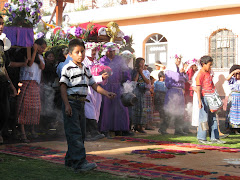
On holy Friday the team in the planning office and I made an alfombra in front of the municipal building. It was a beautiful day and we enjoyed the 5 hours together before the procession came and trampled our creation on their way to the church; as is the tradition. It’s similar to a Tibetan mandala only the alfombras are much less complicated and don’t require nearly as much time to make. But making something only to quickly destroy it is the shared commonality.
Rambo and the Quilters
A good buddy from Colorado, Steve, is the co-owner of a travel company and he recently brought a group of quilting enthusiasts from the U.S. to Guatemala where they experienced one of the country’s finest attributes – its textile history. There are literally thousands of different traditional outfits worn by both Mayan women and men and the group spent a week here visiting textile museums, meeting with famous quilting experts (or should I say artists?) and of course they did some sightseeing. I took the week off and traveled around with them.
Some of the highlights include staying three nights in Casa Santo Domingo, Guatemala’s most remarkable hotel. It’s an old convent which was converted into a 5-star hotel in the 80’s. I’ve never seen anything like it. They did an amazing job preserving the ancient structure and surrounding colonial ruins and blending it with modern amenities. I certainly enjoyed a few swims in the pool and delicious cuisine. I have to admit that I missed the usual fare of beans and eggs and tortillas but I certainly didn’t complain eating filet mignon for dinner or cream cheese, lox and capers for breakfast. I also made friends with the massage therapist, Milton, who offered to sneak me in to the pool area anytime I’m in Antigua. His family used to host Peace Corps volunteers and he appreciates what we do and have to go through during our 2 years here.
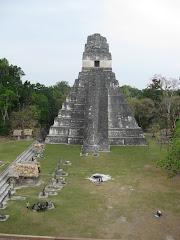
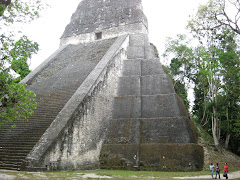
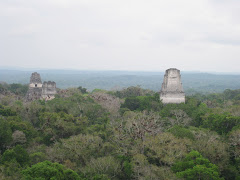
We also went to Chichicastenango, Central America’s largest indigenous arts market, and then headed up to Petén to visit the Tikal Ruins. Tikal was inexplicably magical. From spider and howler monkeys to leaf cutter ants to some of the most impressive Mayan temples and ruins in this part of Central America, I saw and learned a lot and fell in love with this country all over again.
So a week with 15 quilters, mainly older grandma types (very endearing though), who do you think the tour company should have provided as the guide? A Guatemalan quilting enthusiast who could connect with their clients? No, not quite. The guide knew a lot about Guatemalan textile history, no doubt about it. He just happened to be a former Kaibil commander during the internal conflict. The Kaibilis, referred to as killing machines, are known as the most elite special-forces unit in Guatemala. Specialists in jungle warfare and survival, these guys are unstoppable killers. The only foreign special-forces unit currently operating in the Congo is a Kaibil team. Vinicio, our fearless guide, and his unit were responsible for countless raids in the Ixil Triangle over many years (where the worst of the worst went down), 915 total confirmed kills, and who knows what else. There are reports that the Kaibiles did some things to the villagers not worth repeating on this blog.
He would tell stories about the war to all the quilters over the on-board microphone on the bus. Nobody had a frame of reference and I think I might have been the only one who had some insight as to what he was saying. For example, he was part of three military coups; one of which put Rios Montt in charge of the country. If you know anything about what happened during this period in Guatemala’s history, you’ll know what a brutal leader Montt turned out to be. Vinicio was a wealth of knowledge about quilting, the history of the war, and the jungles of Petén. Everywhere we went people recognized him and addressed him by his nickname, Rambo.
So that’s a little taste of my week with Rambo and the quilters. Thanks, Steve, for giving me the opportunity to spend the week with you guys. And if you don’t come back to Guatemala sometime soon, Rambo and I are going to track you down and put you in the machete corner. Rambo taught me a lot of new phrases.
Holy week, Semana Santa, is the largest religious holiday in Guatemala which leads up to Easter Sunday. From the famed religious processions in Antigua, to the beautiful alfombra ( rugs) people make in the street with dyed sawdust, it’s a week of relaxation and celebration with family and friends; not to mention a bunch of religulousness but most of you know how I feel about that anyway so I’ll spare you the soapbox speech just this once.
I remained in my site as the office was closed and I felt it important to spend the holiday in my community as a way to further integrate. I was in Antigua the week before the holiday and participated in a pre-Semana Santa procession where hundreds were present. Truth be told I was on the way to a pub and I could only get there by marching in the procession with hundreds of others. I can only imagine how crowded it gets during holy week.
On holy Friday the team in the planning office and I made an alfombra in front of the municipal building. It was a beautiful day and we enjoyed the 5 hours together before the procession came and trampled our creation on their way to the church; as is the tradition. It’s similar to a Tibetan mandala only the alfombras are much less complicated and don’t require nearly as much time to make. But making something only to quickly destroy it is the shared commonality.
Rambo and the Quilters
A good buddy from Colorado, Steve, is the co-owner of a travel company and he recently brought a group of quilting enthusiasts from the U.S. to Guatemala where they experienced one of the country’s finest attributes – its textile history. There are literally thousands of different traditional outfits worn by both Mayan women and men and the group spent a week here visiting textile museums, meeting with famous quilting experts (or should I say artists?) and of course they did some sightseeing. I took the week off and traveled around with them.
Some of the highlights include staying three nights in Casa Santo Domingo, Guatemala’s most remarkable hotel. It’s an old convent which was converted into a 5-star hotel in the 80’s. I’ve never seen anything like it. They did an amazing job preserving the ancient structure and surrounding colonial ruins and blending it with modern amenities. I certainly enjoyed a few swims in the pool and delicious cuisine. I have to admit that I missed the usual fare of beans and eggs and tortillas but I certainly didn’t complain eating filet mignon for dinner or cream cheese, lox and capers for breakfast. I also made friends with the massage therapist, Milton, who offered to sneak me in to the pool area anytime I’m in Antigua. His family used to host Peace Corps volunteers and he appreciates what we do and have to go through during our 2 years here.
We also went to Chichicastenango, Central America’s largest indigenous arts market, and then headed up to Petén to visit the Tikal Ruins. Tikal was inexplicably magical. From spider and howler monkeys to leaf cutter ants to some of the most impressive Mayan temples and ruins in this part of Central America, I saw and learned a lot and fell in love with this country all over again.
So a week with 15 quilters, mainly older grandma types (very endearing though), who do you think the tour company should have provided as the guide? A Guatemalan quilting enthusiast who could connect with their clients? No, not quite. The guide knew a lot about Guatemalan textile history, no doubt about it. He just happened to be a former Kaibil commander during the internal conflict. The Kaibilis, referred to as killing machines, are known as the most elite special-forces unit in Guatemala. Specialists in jungle warfare and survival, these guys are unstoppable killers. The only foreign special-forces unit currently operating in the Congo is a Kaibil team. Vinicio, our fearless guide, and his unit were responsible for countless raids in the Ixil Triangle over many years (where the worst of the worst went down), 915 total confirmed kills, and who knows what else. There are reports that the Kaibiles did some things to the villagers not worth repeating on this blog.
He would tell stories about the war to all the quilters over the on-board microphone on the bus. Nobody had a frame of reference and I think I might have been the only one who had some insight as to what he was saying. For example, he was part of three military coups; one of which put Rios Montt in charge of the country. If you know anything about what happened during this period in Guatemala’s history, you’ll know what a brutal leader Montt turned out to be. Vinicio was a wealth of knowledge about quilting, the history of the war, and the jungles of Petén. Everywhere we went people recognized him and addressed him by his nickname, Rambo.
So that’s a little taste of my week with Rambo and the quilters. Thanks, Steve, for giving me the opportunity to spend the week with you guys. And if you don’t come back to Guatemala sometime soon, Rambo and I are going to track you down and put you in the machete corner. Rambo taught me a lot of new phrases.
Subscribe to:
Posts (Atom)